Introduction: The Quiet Shift You Didn’t Expect
Hearing loss often creeps in gradually. At first, it’s just a missed word here or there. You turn the TV up a notch. You ask people to repeat themselves more often. Then one day, you realize: phone calls are becoming frustrating — even intimidating.
What can one do about it?
For many late-deafened adults, the phone is the first place where hearing loss shows its impact. Without clear conversations, it’s easy to feel isolated from family, friends, and essential services. But here’s the good news: technology has advanced dramatically. Programs like the FCC’s nationwide IP CTS (Internet Protocol Captioned Telephone Service) offered by apps such as Rogervoice make it possible to stay connected, independent, and confident — even as hearing changes.
It’s a game-changer.
This article explores practical ways to stay connected when you’re losing your hearing: from adapting your environment to embracing captioned calls and modern accessibility tools.
Understanding the Emotional Side of Hearing Loss
It’s not just about sound — it’s about identity and connection. Many adults describe hearing loss as feeling “cut off” from the world. Some avoid phone calls entirely, relying on texts or email, which can limit spontaneity and closeness.
Don’t let it affect you: the right preparation and equipment can make a difference.
Acknowledging these emotions is important. Connection isn’t just functional; it’s deeply human. That’s why finding solutions that restore confidence in real-time conversations matters so much.
Everyday Strategies to Stay Connected
1. Let Technology Work for You
Smartphones, smart TVs, and even smart doorbells have accessibility features designed for hearing-impaired users. For example:
- Live Transcribe (Android) and Live Captions (iOS/Android) can provide on-screen text for in-person conversations or videos.
- Bluetooth-enabled hearing aids can stream calls, music, or meetings directly to your ears.
- Voice-to-text assistants (like Siri or Google Assistant) can help you check messages hands-free.
But when it comes to phone calls — especially important ones — general apps fall short. That’s where captioned calling services like Rogervoice step in.
2. Use Captioned Calls for Clarity
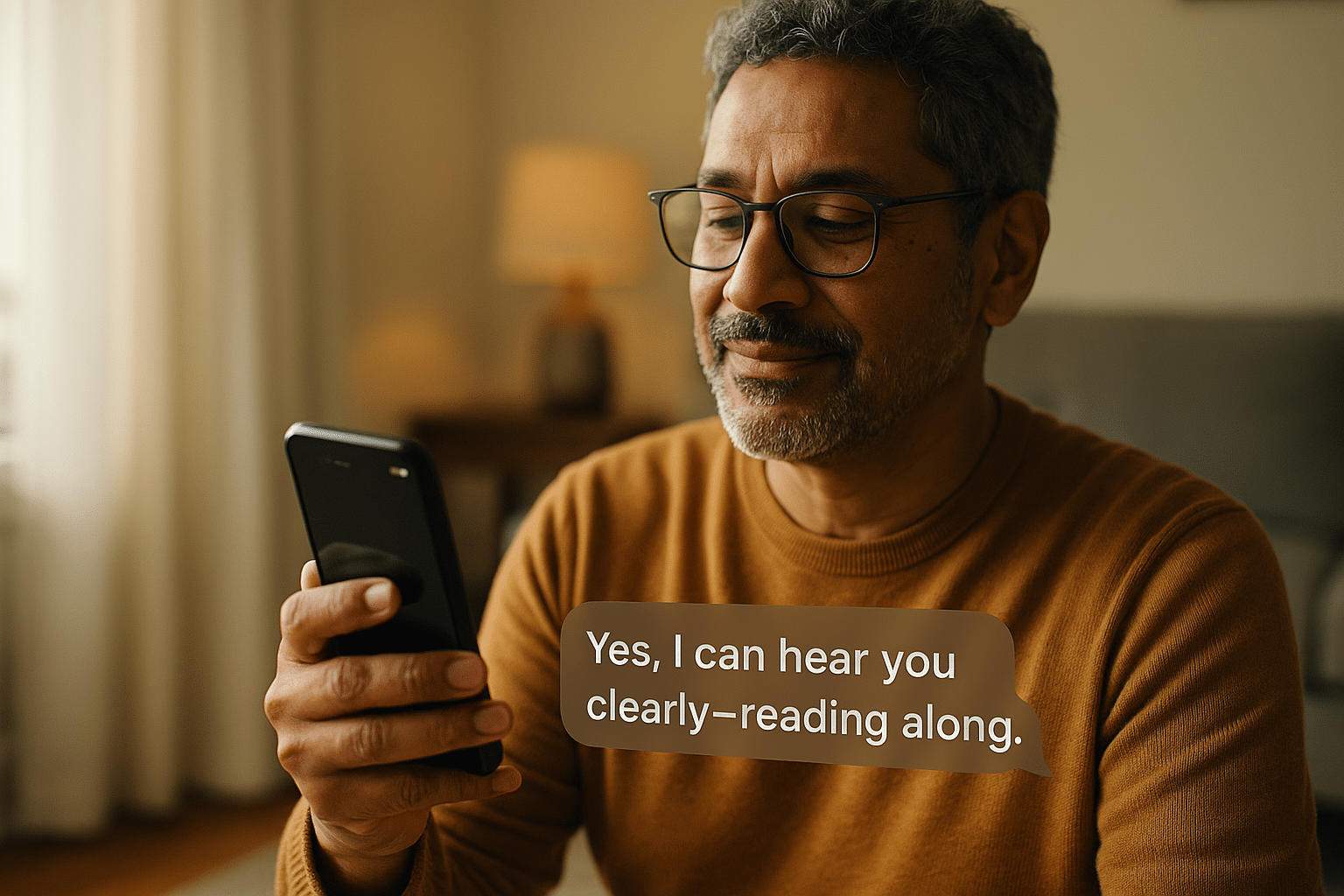
Captioned calls mean you don’t have to guess what was said or pretend you heard. With Rogervoice, you can:
- Read real-time captions during any phone conversation.
- Speak normally for yourself (no intermediary speaks for you).
- Access captions in over 100 languages like Spanish, Korean, Vietnamese, etc.
- Even make video calls with captions, so you can see loved ones and read along.
This turns calls from stressful to empowering — restoring the spontaneity of simply picking up the phone.
3. Communicate Openly With Loved Ones
Family and friends want to help, but they may not always know how. Here are a few simple tips to share with them:
- Speak clearly, not loudly. Shouting distorts sound.
- Face you during in-person conversations for lip cues.
- Use simple confirmations (“Did you catch that?”) instead of long repeats.
- Be patient during calls while you read captions.
Often, just explaining that you’re using captioned calling helps reduce awkwardness.
4. Stay Active in Your Community
Isolation is one of the biggest risks of untreated hearing loss. Consider:
- Joining local or online support groups for late-deafened adults.
- Attending events by HLAA (Hearing Loss Association of America) or ALDA.
- Asking your audiologist about community resources.
Technology keeps you connected, but human connection remains irreplaceable.
Why Rogervoice Stands Out for Late-Deafened Adults
Not all captioned calling services are equal. Here’s what makes Rogervoice particularly suited for those adapting to hearing loss:
- Best-in-class speed and accuracy: Independent government benchmarks show Rogervoice’s captions are among the fastest and most accurate in the U.S.
- Video calls with captions: Unique among U.S. providers, this adds a visual dimension for emotional connection.
- Multilingual support: Over 100 languages supported, helping bilingual households stay connected.
- Low-vision features: Custom fonts, contrast, and color settings for those with combined vision and hearing challenges.
- e911 calling: The first IP CTS provider with emergency calling built in.
- Deaf-led innovation: Created by a founder who is deaf and uses the app daily.
For someone who’s just beginning to adapt, these differences mean ease, trust, and confidence from day one.
Stories From People Like You
- “I stopped answering the phone because I was embarrassed to keep saying, ‘What?’ Rogervoice gave me back the confidence to call my sister whenever I want.” – Susan, 64
- “As a bilingual family, being able to read captions in Spanish makes all the difference for my parents. Rogervoice is the only service that lets us do that.” – Javier, 41
- “When my husband had chest pains, I called 911 through Rogervoice. Reading the dispatcher’s instructions in real time was life-saving.” – Mary, 58
Real experiences show that staying connected isn’t about technology alone — it’s about regaining independence.
Stay Connected With Loved Ones
Practical Steps to Start Using Rogervoice
- Download the app from the App Store or Google Play.
- Register and self-certify that you have hearing loss that makes phone calls difficult.
- Start calling with captions — free, unlimited, and FCC-certified.
- Explore video calls, multilingual settings, and emergency calling to see how much more connected life feels.
Conclusion: Connection Is Possible
Losing your hearing doesn’t mean losing your connections. With tools like Rogervoice’s IP CTS, you can stay part of the conversation, maintain independence, and enjoy the confidence of never missing a word.
👉 Try Rogervoice today — the first captioned calling service designed by and for people with hearing loss.
