60% of Americans Say Phone Calls Are Not Fully Accessible to Deaf and Hard-of-Hearing People
Phone calls remain one of the most established forms of communication in the United States, used across healthcare, work, customer service, and personal life. But new national research from Rogervoice suggests that while the channel is still essential, confidence in its reliability and accessibility is weakening.
The 2026 State of the Phone Call Survey by Rogervoice, conducted by Censuswide among 1,000 nationally representative U.S. adults aged 20–89 (April 13–20, 2026, MRS and ESOMAR compliant), shows a consistent pattern: Americans are not abandoning phone calls, but many no longer trust them as a frictionless form of communication.
Avoidance is widespread, comprehension issues are common, and a majority of respondents believe phone calls are not fully accessible to deaf or hard-of-hearing users—pointing to a broader decline in communication confidence.
Phone Calls Are Increasingly a High-Friction Channel
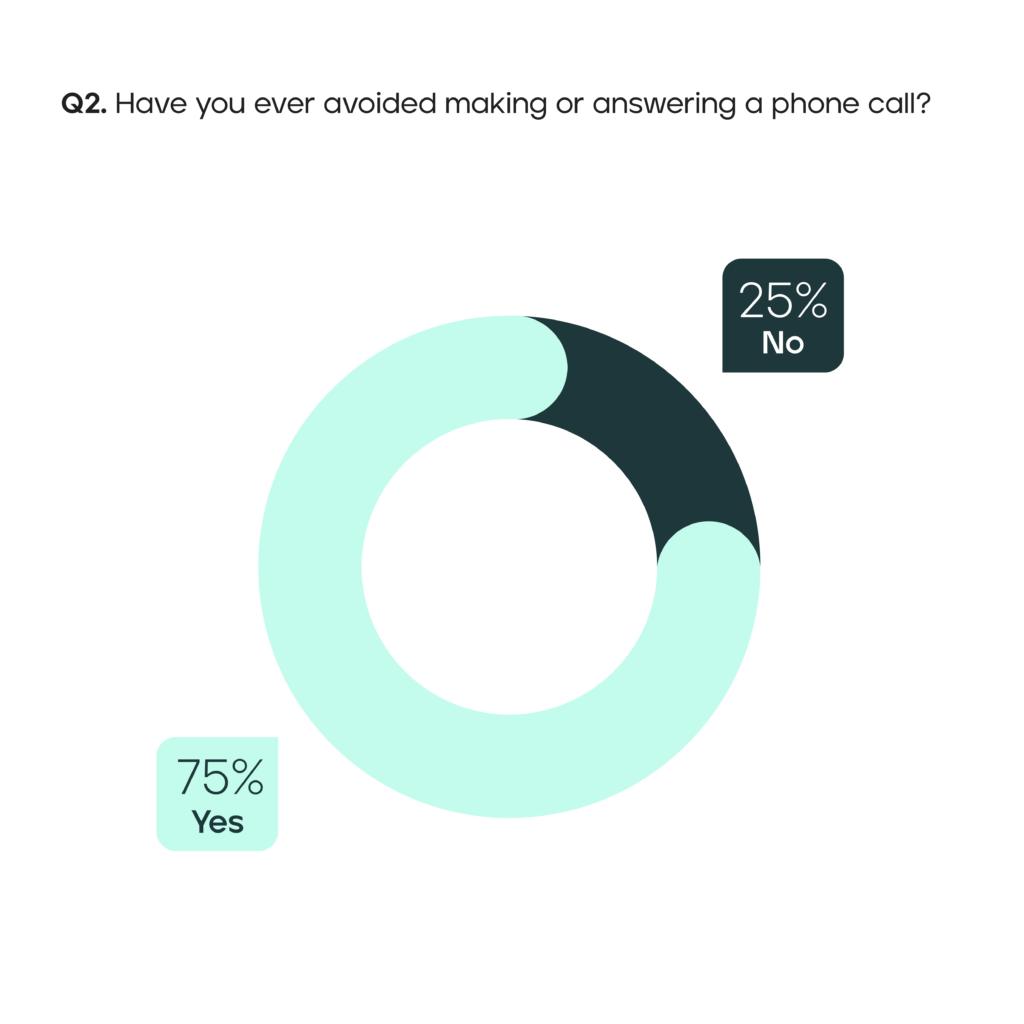
Avoiding phone calls has become a normalized behavior rather than an exception. 75% of Americans say they have avoided making or answering a phone call at least once.
Among those who avoid calls, the most common drivers are:
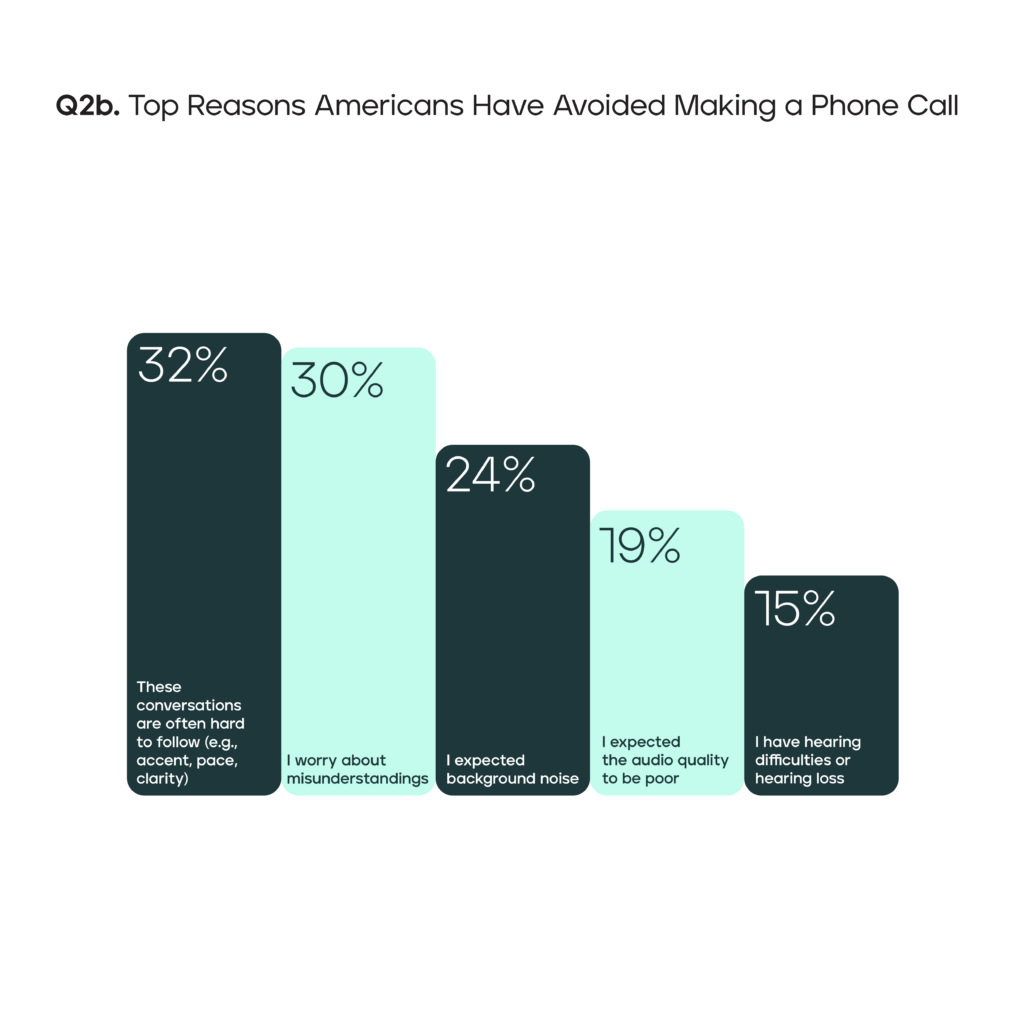
- Difficulty following conversations due to accent, pace, or clarity (32%)
- Fear of misunderstandings (30%)
- Expected background noise (24%)
- Poor audio quality (19%)
- Hearing difficulties or hearing loss (15%)
Across responses, the pattern is consistent: avoidance is driven less by disengagement and more by the expectation that calls will be difficult to follow or interpret in real time.
Communication Breakdown Across Demographics
Difficulty understanding phone conversations is not limited to older adults or people who are deaf or hard of hearing.
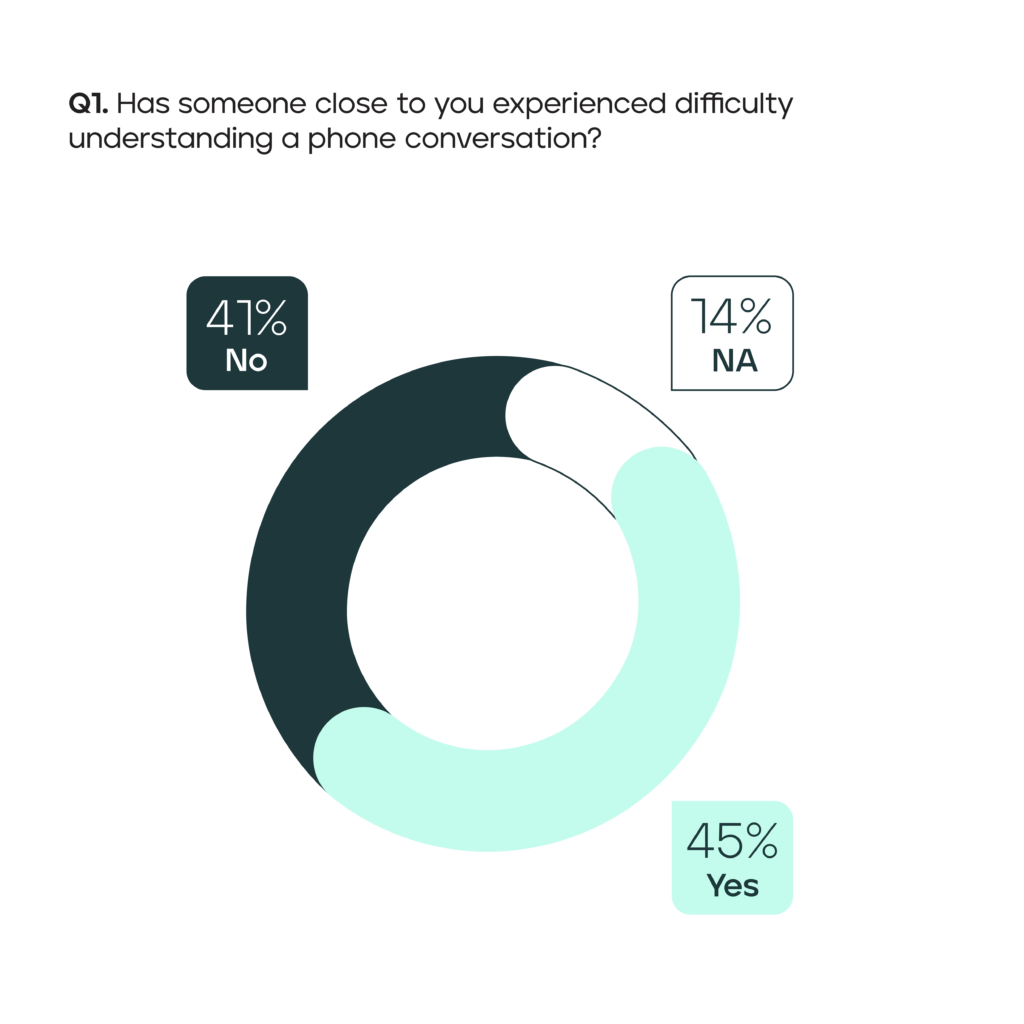
Nearly two in five Americans (40%) say they have struggled to follow phone calls themselves. In addition, 45% report that someone close to them, such as a parent or family member, experiences similar challenges.
The pattern holds across age groups. Around 30% of adults aged 20–29 report always or often struggling to follow phone conversations, compared with 27% in their 30s. Midlife and older adults report comparable levels of difficulty, with no single age group emerging as a clear outlier.
A similar consistency appears in household impact, where roughly 31% of respondents in their 20s and 29% in their 30s report that someone close to them frequently struggles with phone conversations, with steady levels observed across other age groups.
Men and women report broadly similar experiences both personally and through their close networks, with only modest variation between groups.
A Perception Gap Around Accessibility
A majority of Americans believe the current phone system is not fully accessible.
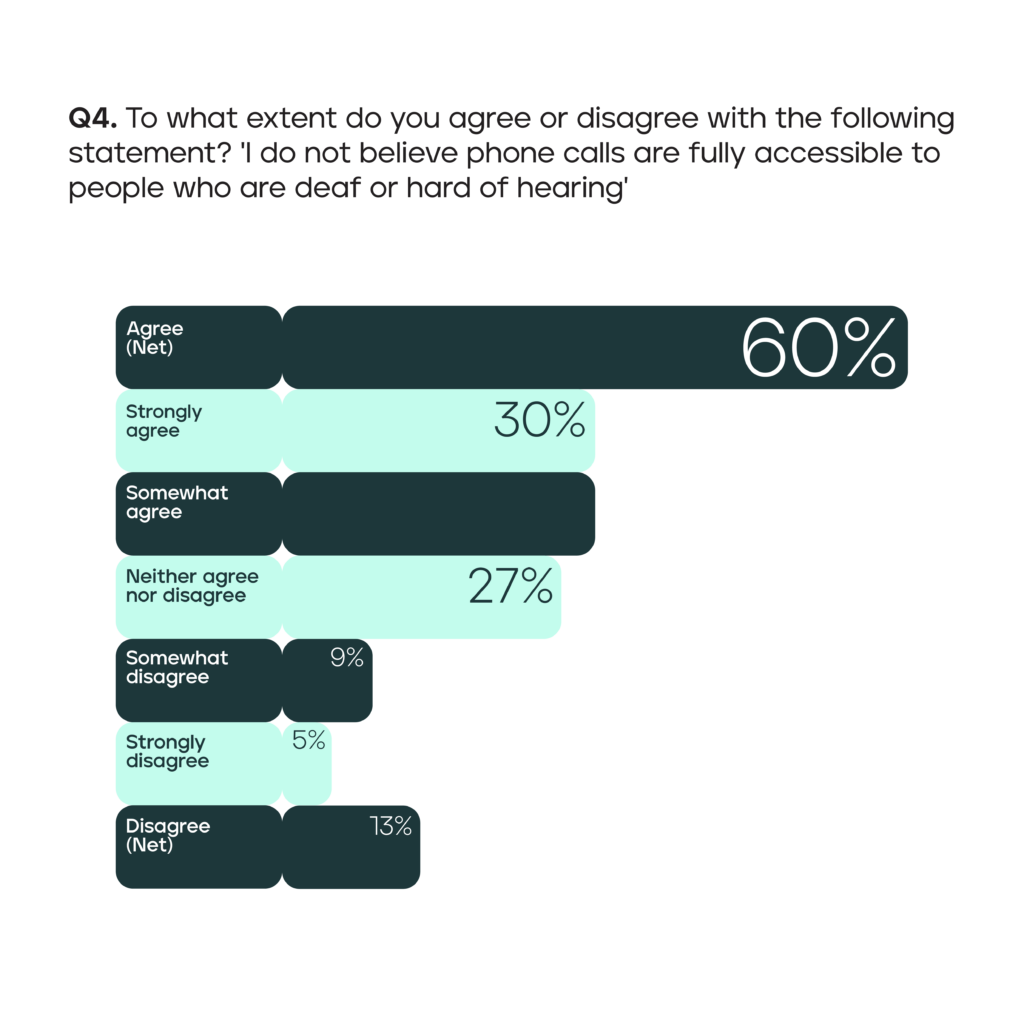
60% say phone calls are not fully accessible to people who are deaf or hard of hearing. Only a small minority disagree, indicating strong consensus around the limitations of traditional voice-only communication systems.
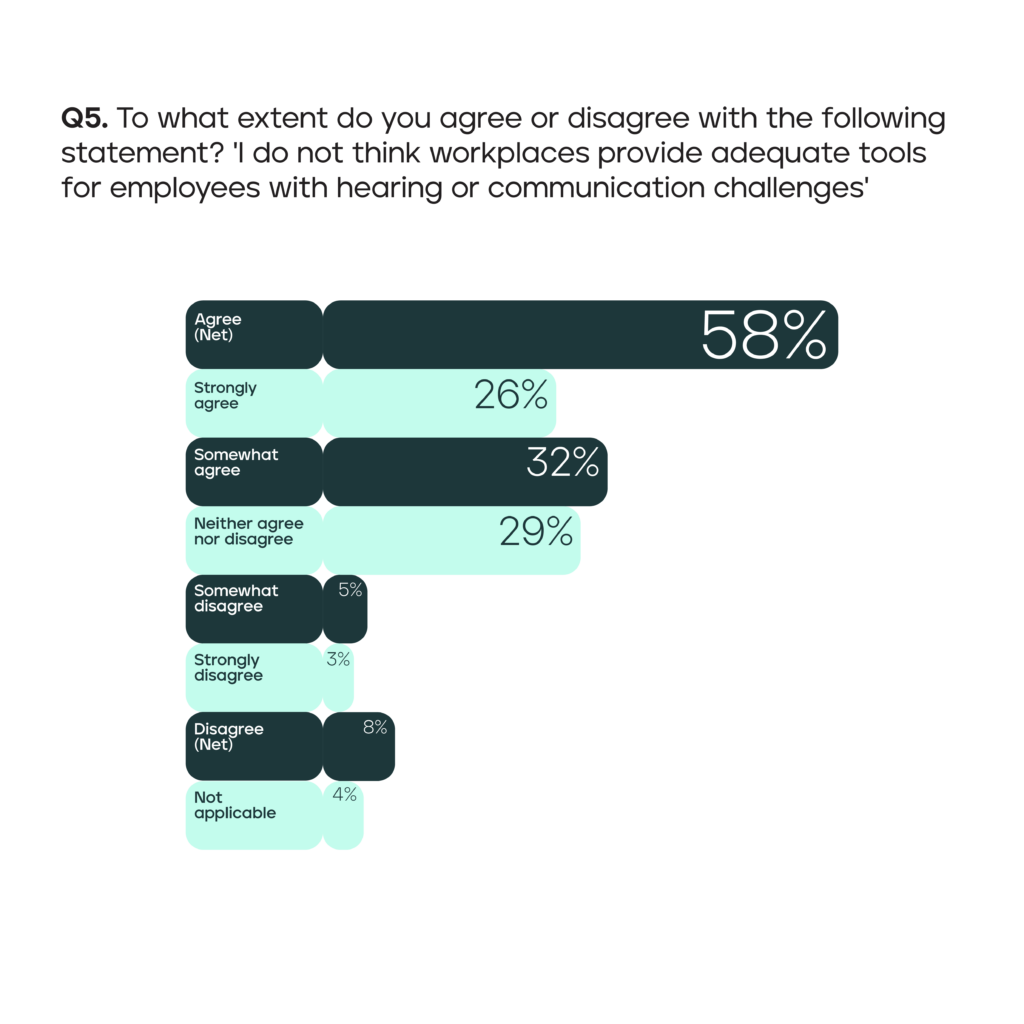
This perception also extends into professional environments. 58% of Americans believe workplaces do not provide adequate communication tools for employees with hearing or communication challenges.
Accessibility is no longer being framed purely as an assistive concern, but understood as a mainstream communication infrastructure issue affecting both personal and professional life.
Communication Shifts Toward Readable, Replayable Conversations
Communication habits continue to shift away from voice-first interaction. When asked about preferred channels for virtual communication, Americans reported:
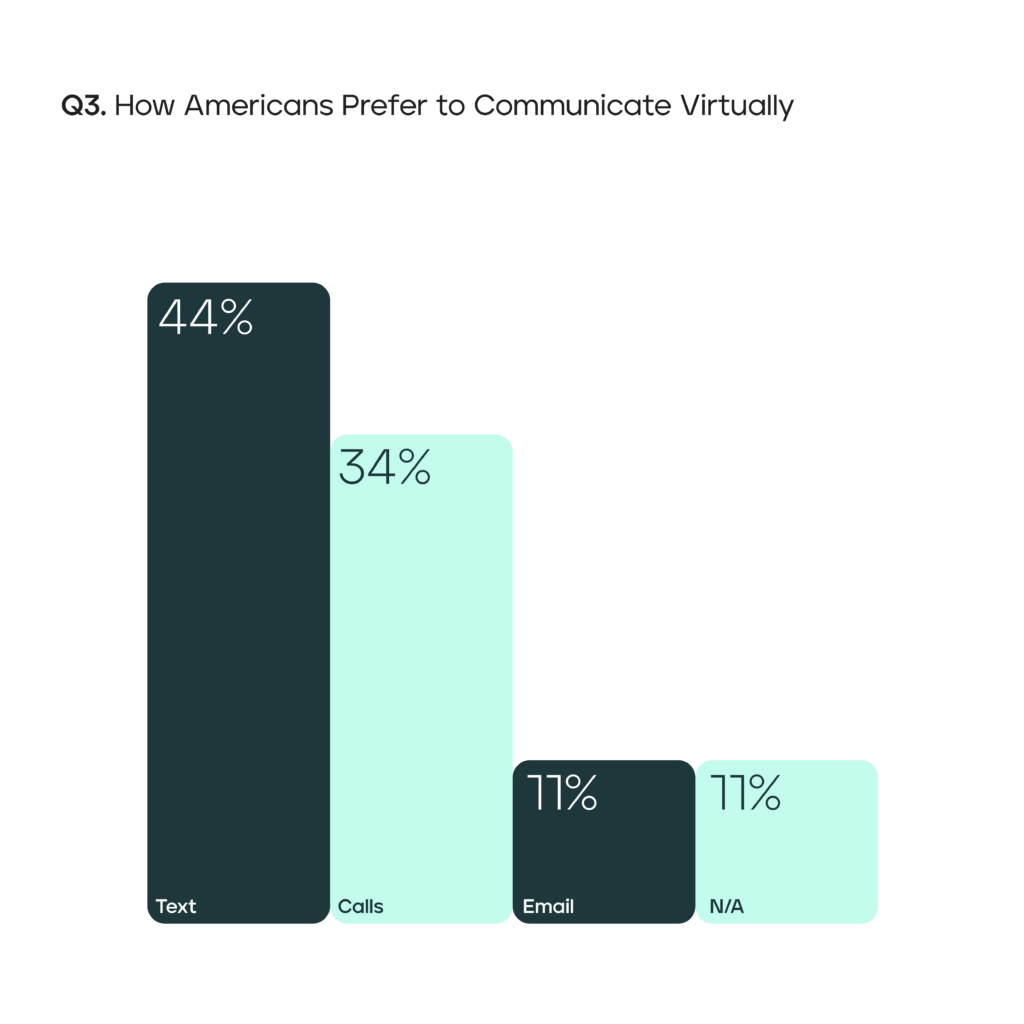
- Text messaging — 44%
- Calls – 34%
- Email — 11%
- No preference — 11%
While phone calls remain important for urgent or complex conversations, they are no longer the default way people choose to communicate. Across channels, a consistent preference emerges: communication that can be read, reviewed, and returned to later.
Voice calls can be easy to miss or mishear, which creates friction when accuracy or recall matters. Real-time captions and stored call transcripts address this gap by adding persistence and readability to voice conversations. Rogervoice brings those capabilities directly into phone calls, allowing conversations to be followed in real time and revisited afterward in written form.
Awareness of Captioning Tools Is Growing – But Still Uneven
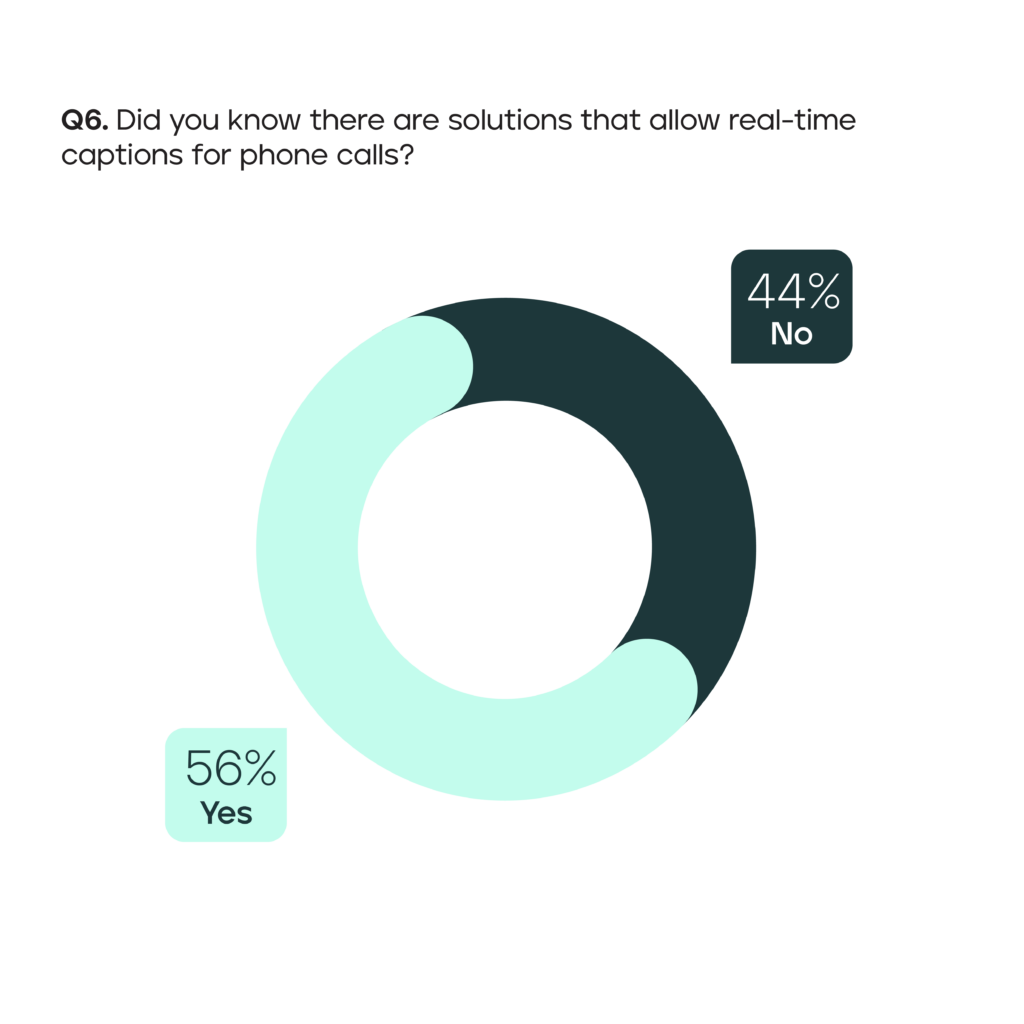
As communication challenges increase, awareness of assistive technology remains incomplete. Nearly half of Americans (44%) are not aware that real-time captioning solutions for phone calls exist, a solution for a problem many of them may face every day. Just over half (56%) say they are.
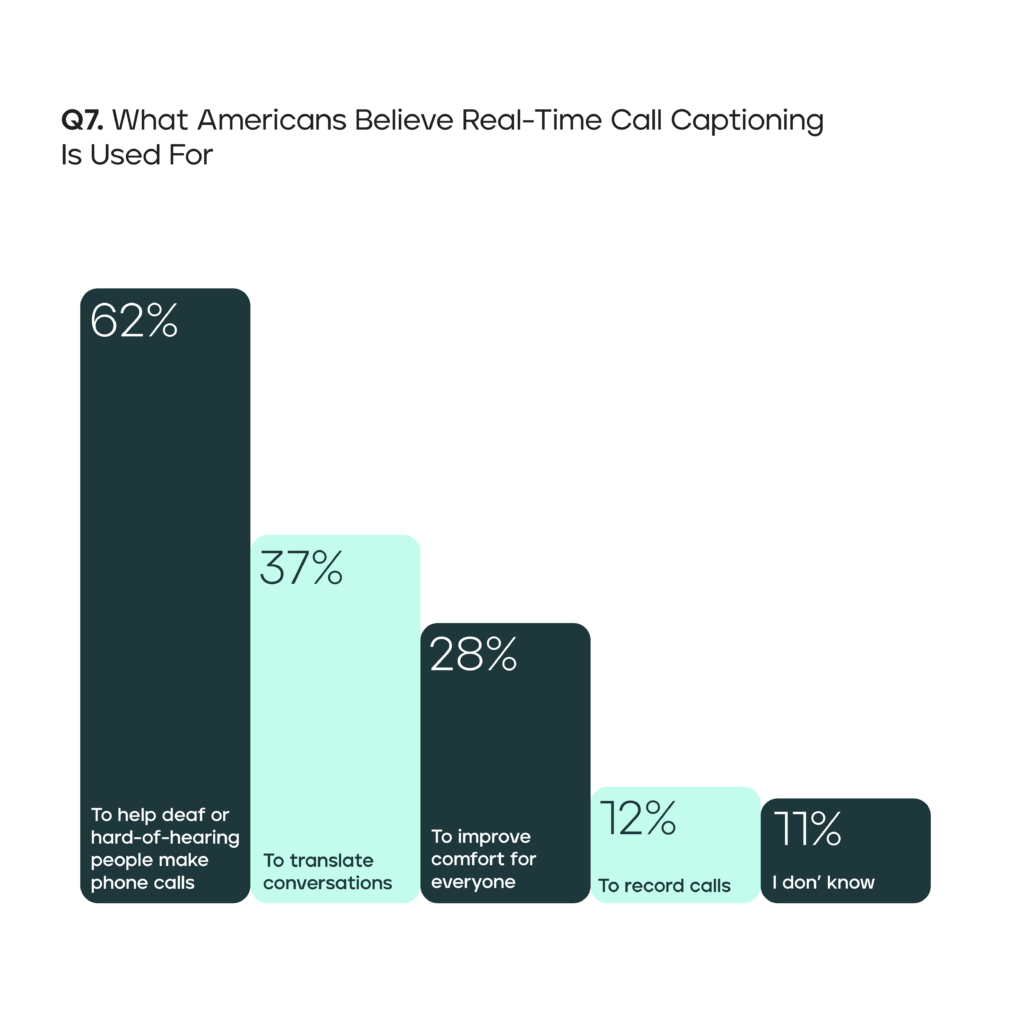
When asked about their purpose, most respondents correctly identify accessibility use cases for deaf and hard-of-hearing users (62%), but substantial minorities associate these tools with translation (37%) or general communication enhancement (28%).
A Shift in Communication Expectations
The 2026 findings point to a consistent pattern: phone calls remain foundational, but the experience of using them is increasingly inconsistent across users.
Americans are avoiding calls at high rates, reporting difficulty understanding conversations, and widely agreeing that phone systems are not fully accessible. At the same time, communication behavior is shifting toward text-based and asynchronous channels that offer greater predictability and control.
This is not a rejection of voice communication. It is a recalibration of expectations.
The next phase of communication will not be defined by replacing phone calls, but by making them more reliable, more accessible, and more aligned with how people actually communicate today.
Key Findings from Rogervoice’s 2026 State of the Phone Call Survey
- 75% of Americans have avoided making or answering a phone call at least once
- 32% of Americans who reported avoided a phone call did so due to accent, pace, or clarity as a reason for avoiding phone calls
- 19% of Americans always or often struggle to understand phone conversations
- 45% of Americans report that someone close to them, such as a parent or family member, has difficulty understanding phone conversations
- 60% of Americans believe phone calls are not fully accessible to people who are deaf or hard of hearing
- 58% of Americans believe employers do not provide sufficient tools for hearing or communication needs
- 44% of Americans prefer text messaging as their method for virtual communication
- 34% of Americans prefer phone calls as their method for virtual communication
- 56% of Americans are aware that real-time captioning solutions for phone calls exist
About the Survey
The research was conducted by Censuswide among a sample of 1,000 U.S. respondents aged 20 to 89, nationally representative. Data was collected between April 13 and April 20, 2026.
Censuswide is a member of the Market Research Society (MRS) and the British Polling Council (BPC), and a signatory of the Global Data Quality Pledge. Censuswide adheres to the MRS Code of Conduct and ESOMAR principles.
About Rogervoice
Rogervoice is the global pioneer of real-time captioned calls for people with hearing loss. Designed by a founder who is deaf, Rogervoice is a free, FCC-certified, AI-powered app that delivers secure, highly accurate captions and transcripts. Backed by more than a decade of expertise in accessible telecommunications, the award-winning app has captioned more than 10MM calls in 100 languages. By making phone calls easier, Rogervoice empowers users to communicate with confidence, independence, and peace of mind, allowing them to stay connected and in control of their everyday lives. Rogervoice is the highest-rated app among any FCC-certified caption call providers. To download the free app, visit the App Store and Google Play.
