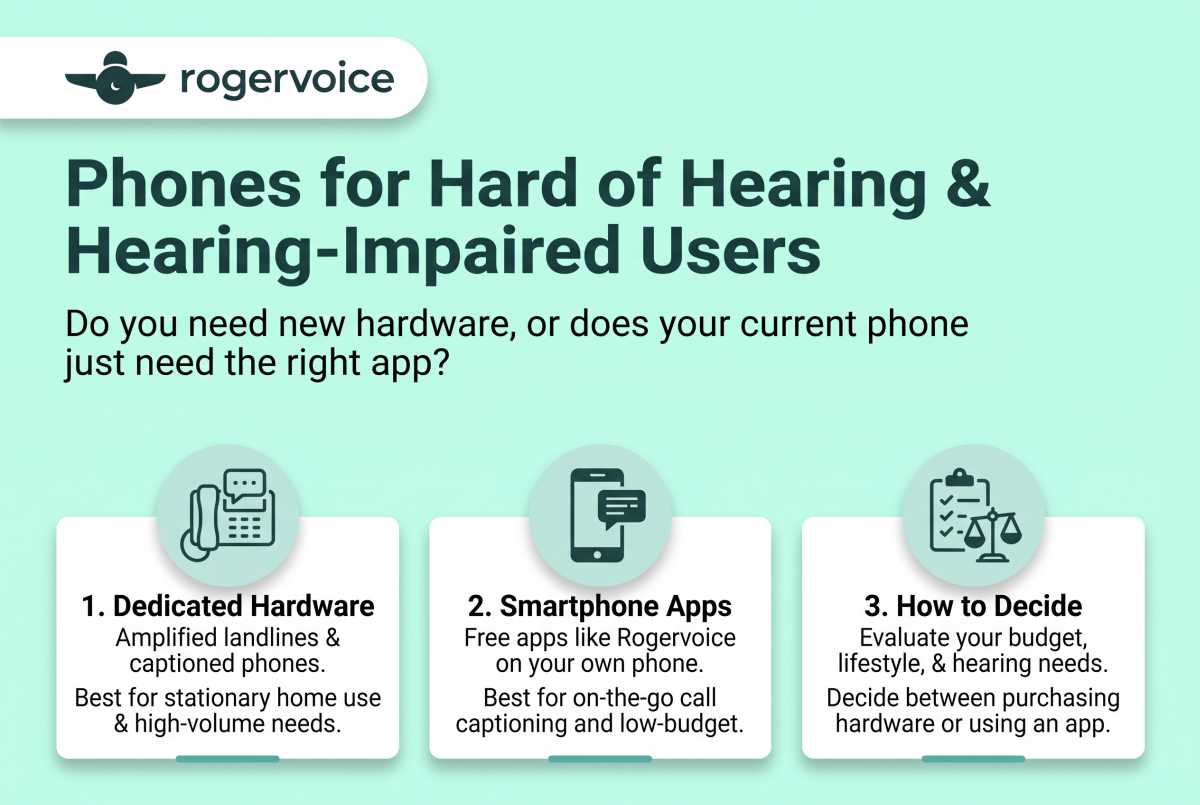
Some people search for a “hearing-impaired phone,” but the clearer way to frame the need is this: Do you need new hardware, or does the phone you already own just need the right app and settings for hard-of-hearing use? Both paths work, but the right one depends on your hearing loss, your budget, and how much you rely on the phone for calls.
This guide covers the features that actually matter, the types of accessible phone solutions on the market, and how to decide between buying dedicated hardware and using a free captioning app on the phone you already carry.
What to Look For in a Phone for Hearing Loss
A few technical details matter more than brand or price:
- Hearing Aid Compatibility (HAC) rating: Look for M3/M4 (microphone coupling) and T3/T4 (telecoil coupling) ratings, the FCC’s standard scale for how well a phone works with hearing aids.
- Volume amplification: Some phones boost call volume well beyond standard smartphone limits, which is useful for people with mild to moderate hearing loss.
- Bluetooth streaming: Most modern hearing aids and cochlear implants pair directly with smartphones that stream calls straight to the device.
- Visual and vibrating alerts: Flashing lights or strong vibration patterns to alert you to incoming calls and notifications and are standard on most smartphones and available as add-ons for landlines.
- Real-time text (RTT): This carrier-supported feature sends text character by character during a call. That’s useful when a full conversation needs to happen in text.
- Captioning compatibility: Whether the phone, or an app on it, can display real-time captions of what the other person is saying.
Types of Accessible Phone Solutions
There’s no single “best” hardware category. Here’s how the main options compare:
| Solution | What it is | Best for |
| Amplified corded or cordless phone | A landline handset with boosted volume and adjustable tone. | Mild to moderate hearing loss, home use. |
| Captioned telephone device | A landline phone with a built-in screen showing call captions. | Significant hearing loss, home use, no smartphone needed. |
| Smartphone and a captioning app | A standard iPhone or Android phone paired with an app that captions calls. | People who already own a smartphone and want captions in more places. |
| Video relay-capable phone | A device or app that routes calls through a sign language interpreter. | ASL users making calls to hearing parties. |
| TTY/TDD device | A legacy text-based telephone typing device. | People who still need compatibility with older text telephone systems. |
Many people already carry the hardware for one of these options in their pocket.
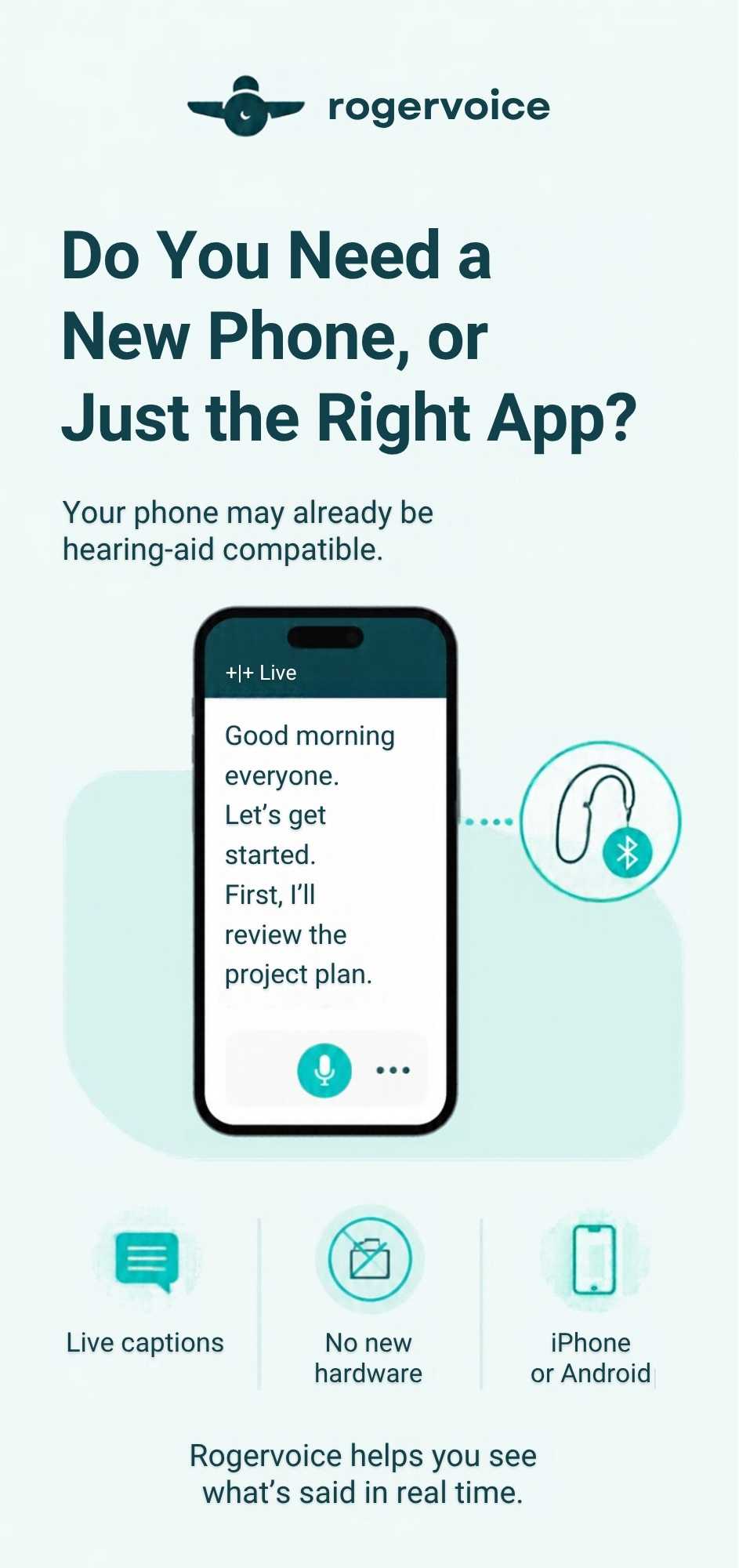
Do You Need a New Phone, or Just the Right App?
Most smartphones sold today already meet hearing aid compatibility standards and support Bluetooth streaming out of the box. For many people, the missing piece isn’t the phone, it’s a way to see what’s being said on a call in real time.
That’s what a captioned calling app adds. Rogervoice, for example, runs on the iPhone or Android phone you already own and displays live captions of the other person’s voice during a regular call, no new hardware required. It’s free for eligible registered users under FCC rules, and captioning runs on AI-only technology. There’s no human listener on the line, no ads, and no data sold.
Designed from lived experience by Olivier Jeannel, deaf since age 2, Rogervoice has captioned more than 12 million calls across 100-plus languages.
A dedicated captioned telephone still makes sense for someone who doesn’t use a smartphone. But for most people with mild, moderate, or progressive hearing loss, a captioning app closes the gap without requiring you to buy anything new.
How to Choose the Right Option
- Identify your hearing loss level. Mild to moderate loss often only needs amplification or captions; significant or profound loss may need a dedicated captioned device or an interpreter-based option.
- Check what you already own. If you have a smartphone, check its HAC rating and Bluetooth pairing with your hearing aids before buying anything new.
- Decide how often you’re on the phone. Frequent callers benefit most from a captioning app that works on every call. Occasional callers may be fine with a simple amplified handset.
- Factor in your budget. Amplified and captioned landline devices can run from $50 to several hundred dollars. A smartphone captioning app is typically free for eligible users.
- Test before you commit. Many captioning apps, including Rogervoice, are free to download in iOS and Google Play, so there’s no cost to trying one before deciding you need new hardware.
Frequently Asked Questions
What is the best phone for someone who is hard of hearing?
There’s no single best phone. The right choice depends on whether you need amplification, captions, Bluetooth hearing-aid streaming, or a combination, and whether you already own a smartphone.
Do I need a special phone if I already have hearing aids?
Usually not. Most modern smartphones stream directly to Bluetooth-enabled hearing aids and cochlear implants. Check your phone’s HAC rating if you’re unsure.
Are captioned phones free?
Some FCC-certified captioned telephone services and captioning apps are available with no monthly subscription fees for eligible registered users with hearing loss. Captioning costs are covered through a federally administered fund.
Can I get captions on my existing smartphone without buying a new phone?
Yes. A captioning app like Rogervoice adds live captions to calls on the iPhone or Android phone you already have.
The Bottom Line
The right phone for hearing loss is often the one already in your pocket. Before buying dedicated hardware, check your current phone’s hearing aid compatibility and try a free captioning app like Rogervoice. Download free. Make the call you’ve been putting off.
Required IP Captioned Telephone Disclaimer: Federal law prohibits anyone but registered users with hearing loss from using Internet Protocol (IP) Captioned Telephones with the captions turned on. There is a cost for each minute of captions generated, paid from a federally administered fund.
Further Reading
- FCC: Hearing Aid Compatibility Rules — Federal standards for HAC ratings and captioned telephone programs.
- Hearing Loss Association of America — Resources on hearing loss, technology, and advocacy.
- National Association of the Deaf — Resources on accessible communication and legal rights.
For more on workplace accommodations and everyday communication tools, see our guide, Jobs for Deaf People: Roles, Rights, and Communication Tools.
