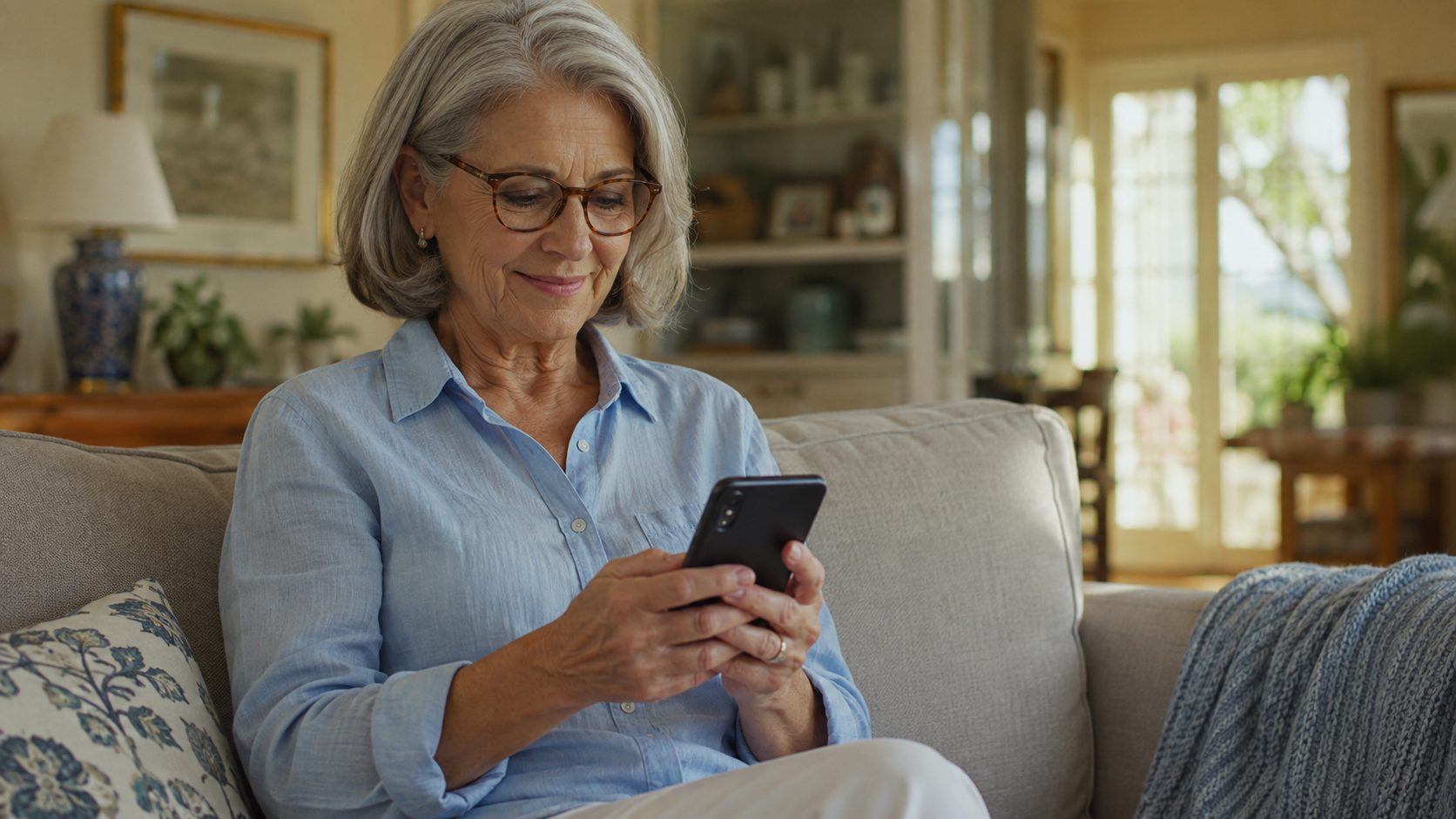
For years, Beverly had a system. For every important call, she called Diana first.
Sometimes it was the insurance company. Sometimes the pharmacy. Sometimes the bank. And sometimes it was her doctor’s office, calling with test results or instructions that Beverly needed to get right.
Her system: Have her daughter Diana make the call from Chicago, while Beverly waited in Sarasota until Diana called back to explain what she’d learned. Or sometimes, she’d patch in Beverly for a three-way call.
It wasn’t popular with either one of them, but it worked.
Beverly especially hated it. The 73-year-old retired teacher is perfectly able to manage her own life. But somewhere along the way, Beverly endured a few too many difficult “call-and-rescue” episodes with Diana that morphed into a bit of a habit. Diana became the family’s unofficial telephone department, an arrangement neither of them had exactly planned or wanted.
The Calls Add Up
It’s easy to overlook the importance of independence – especially for seniors. You make the dentist appointment. You question the unexplained $14 charge on the monthly statement. You call the plumber because that constant drip in the kitchen sink just won’t solve itself. You ask the pharmacist whether that prescription is ready. You get an answer, hang up, and move on.
But for Beverly, those little calls gradually became bigger productions. She could still make them, of course. But concentrating hard enough to catch names, dates, numbers, and instructions was exhausting. Asking someone to repeat themselves once was fine. Three times? That’s when she’d rather have Diana handle it.
And Diana usually did. Sure, there was occasionally an understandable mixture of guilt and a little irritation, but generally, Diana didn’t mind helping her mother. But she often wondered what happened on the calls when Beverly didn’t ask for help. Did Beverly understand everything her doctor said? Was there a call she was putting off? Was “I’ve got it” really “I’ve got it”? Or was it just what parents sometimes say when their children live 1,200 miles away?
The breaking point came when Beverly drove from Sarasota to Ft. Myers to see a highly regarded audiologist – someone who books appointments months in advance – only to learn that she didn’t have an appointment on May thirtieth. It had been on the books for May thirteenth, and Beverly was marked as a no-show. The penalty: a wasted two-hour round trip and a new six-month delay to see the specialist at the rescheduled time. Both mother and daughter knew it was time for a change.
One Call, Then Another
Diana suggested Rogervoice to Beverly to help manage calls independently. Rogervoice requires no new equipment – it works on the smartphone Beverly already had – with real-time captions that let her read the conversation as it happens. Since Rogervoice is FCC-certified, eligible users in the U.S. can use it for free.
It was hardly surprising that Beverly was skeptical, just like anyone would be skeptical when their daughter announces, “I found an app for you.” But then she tried Rogervoice. Not with her doctor; at least not at first. First, she called the pharmacy. A few days later, she called her bank about an unexpected charge on her monthly statement. Then she enjoyed a long conversation with an old teaching colleague. And this time, she didn’t have to ask her friend to repeat herself (which had always made her feel old). She didn’t have to laugh when her friend laughed – even though she didn’t catch the joke. She didn’t spend half of the call wondering what she was missing. Gradually, Rogervoice became just another app on her phone. A very useful one.
Then it was time for the real test: calling the doctor’s office. As Beverly spoke with the nurse, she could read the nurse’s words on the screen while they talked. She caught the details. She asked her own follow-up questions. She didn’t need to patch in Diana for the three-way call. And when the call ended, she didn’t need Diana to provide the “post-game recap.”
Independence in the Small Stuff
For Diana, that phone call to the doctor’s office changed something, too. She could still help whenever Beverly asked. That part wasn’t going anywhere. But she no longer had to wonder whether a missed word might become a missed instruction. And Beverly didn’t need a go-between for conversations she was perfectly capable of having herself.
That’s peace of mind for mother and daughter alike.
Rogervoice captions calls in real time, right on Beverly’s current smartphone, with the same phone number she already has. Transcripts can be revisited afterward, so an appointment time, an address, a spelled medication name, or other important detail doesn’t have to live in memory alone. And since Rogervoice is 100% AI-powered, no human ever listens to the call. Beverly – and her calling partners – have complete privacy.
Today it’s the doctor’s office. Tomorrow, it’ll be the insurance company. Friday, it’ll be a grandchild calling after school with a story that absolutely cannot wait. In fact, Rogervoice has been so helpful that she made a point of mentioning it to her friends at her Tuesday night book club.
The point isn’t that she has a handy app. The point is Beverly gets to make – and take – the call.
